
Hanne Hjelle Hatlebrekke from SINTEF recently presented at Håp i Havet (Hope in the Ocean), an annual student conference held at the University of Tromsø – The Arctic University of Norway. The presentation took place in the Technology for the Future section, where companies shared their efforts to enhance the sustainability of the fisheries and aquaculture industries through innovative technologies.
Hanne’s presentation focused on SINTEF’s work with automatic catch registration in fisheries, specifically how technology can simplify the work of fishers, researchers, and managers. She introduced the EU-funded projects EVERYFISH and OptiFish, which are developing a suite of technologies tailored to different fisheries and vessel types in European waters. These technologies aim to make catch reporting easier for fishers while providing high-quality data to scientists and managers. The improved data collection could contribute to more accurate stock assessments, reduced uncertainties in quotas, and enhanced legal security for fishers.
A key aspect of implementing these technologies is maintaining an open dialogue with the fishing industry. In both EVERYFISH and OptiFish, workshops have been held with fishers across multiple European countries, as well as with fisheries managers from seven different nations. These workshops help gather insights, concerns, and expectations, ensuring that industry needs are incorporated into the development of these tools. OptiFish will continue with follow-up workshops as the project progresses. Additionally, both projects collaborate closely with the Norwegian Directorate of Fisheries, leveraging their expertise at the intersection of fisheries, research, and management.
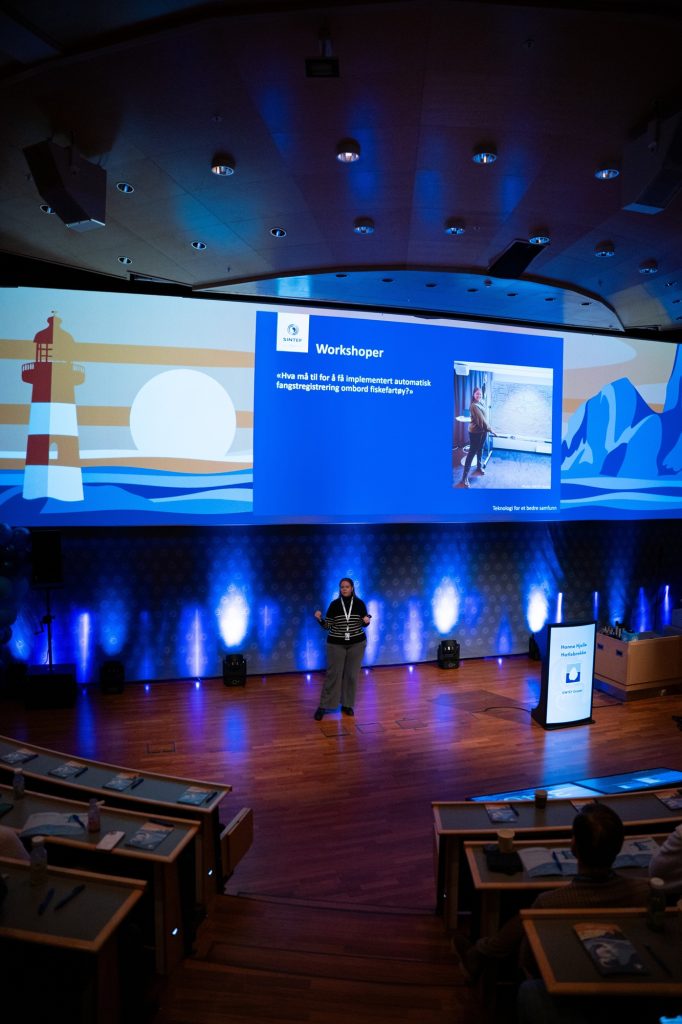
The Håp i Havet conference, open to all students at the University of Tromsø, attracted participants from various academic backgrounds, reflecting the university’s strong focus on ocean science and sustainable marine resource management. The students showed great interest in the session and Hanne’s presentation, highlighting the importance of engaging the next generation of fisheries researchers, engineers, economists, business developers, and managers in addressing sustainability challenges.
By fostering collaboration between researchers, industry stakeholders, and future professionals, projects like OptiFish contribute to the ongoing effort to improve fisheries management and promote sustainability in oceans.
Original text: Hanne Hjelle Hatlebrekke, SINTEF Ocean
Photos: Dina Rindsem
Content editing: reframe.food