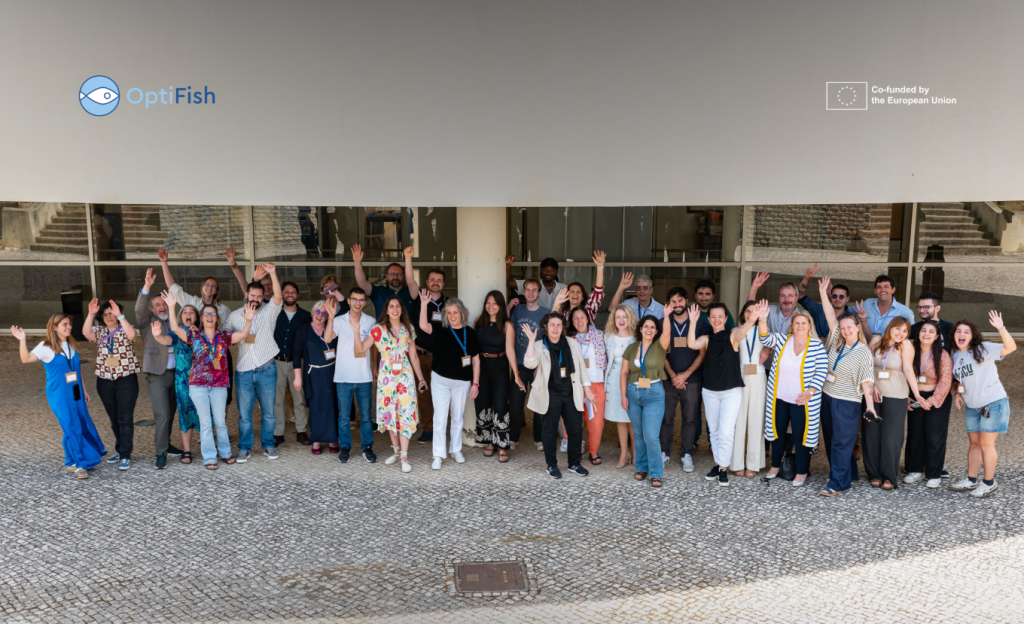
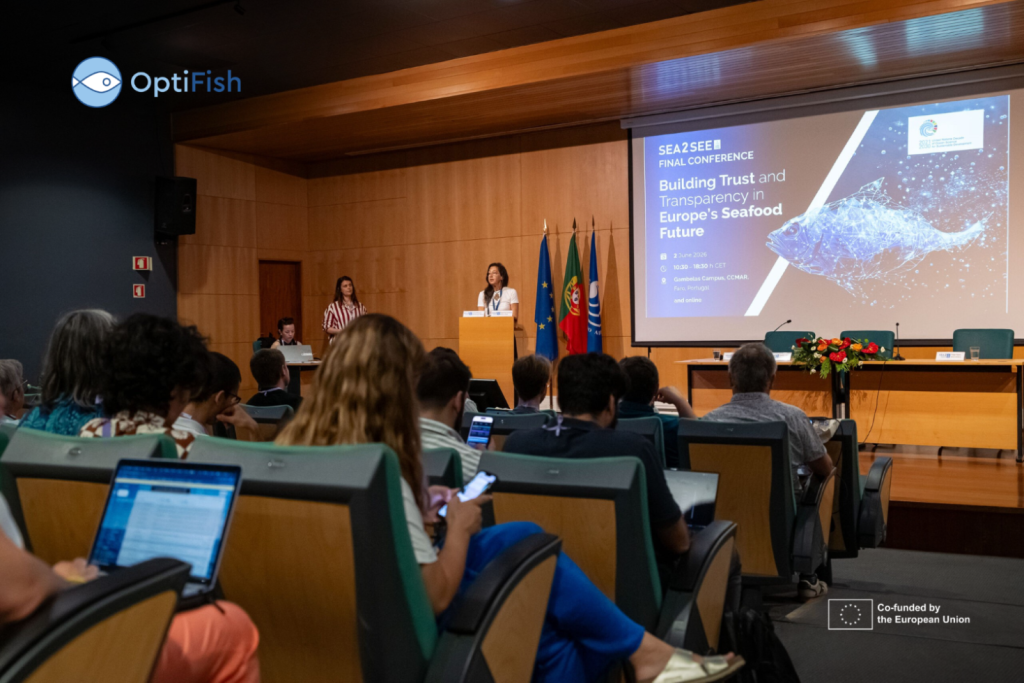
On 2 June 2026, OptiFish participated in the SEA2SEE Final Conference at the University of Algarve in Faro, Portugal. Representing OptiFish, Els Torreele and Jade Maes from ILVO joined researchers, seafood industry representatives, technology providers, policymakers and EU-funded initiatives for a day dedicated to one essential question: how can Europe build more transparent, sustainable and trustworthy seafood value chains?Held under the theme “Building Trust and Transparency in Europe’s Seafood Future”, the conference marked the culmination of four years of work by the SEA2SEE project. Throughout the day, one message came through strongly: digital traceability can support more sustainable seafood systems, but trust is built through people, collaboration and shared responsibility.
Traceability as a foundation for trust
The event opened with welcoming remarks from Professor Alexandra Teodósio, Rector of the University of Algarve, and Carlos Mazorra, SEA2SEE Coordinator and Innovation Director at Smartwater Planet.
In his keynote address, Dr Stefan Meyer, General Manager of the German Association of Fish Processing and Wholesale, explored the growing importance of traceability in seafood supply chains. His message was clear: traceability is no longer only a regulatory requirement. It has become a strategic tool to strengthen consumer confidence, support responsible fisheries management and improve transparency across increasingly complex seafood markets.
This perspective closely connects with OptiFish’s own mission. By developing digital catch monitoring and reporting technologies, OptiFish aims to support more accurate fisheries data, strengthen transparency and contribute to greater trust in seafood products.
Technology alone is not enough
A recurring theme throughout the conference was that technology can enable transparency, but it cannot create trust on its own.
This is highly relevant for OptiFish. Our work on artificial intelligence, electronic monitoring, rapid DNA tools and data systems is developed alongside stakeholder engagement and acceptance activities. For digital fisheries solutions to succeed, they must respond to the needs and realities of fishers, authorities, scientists and society.
Collaboration across Europe’s blue food ecosystem
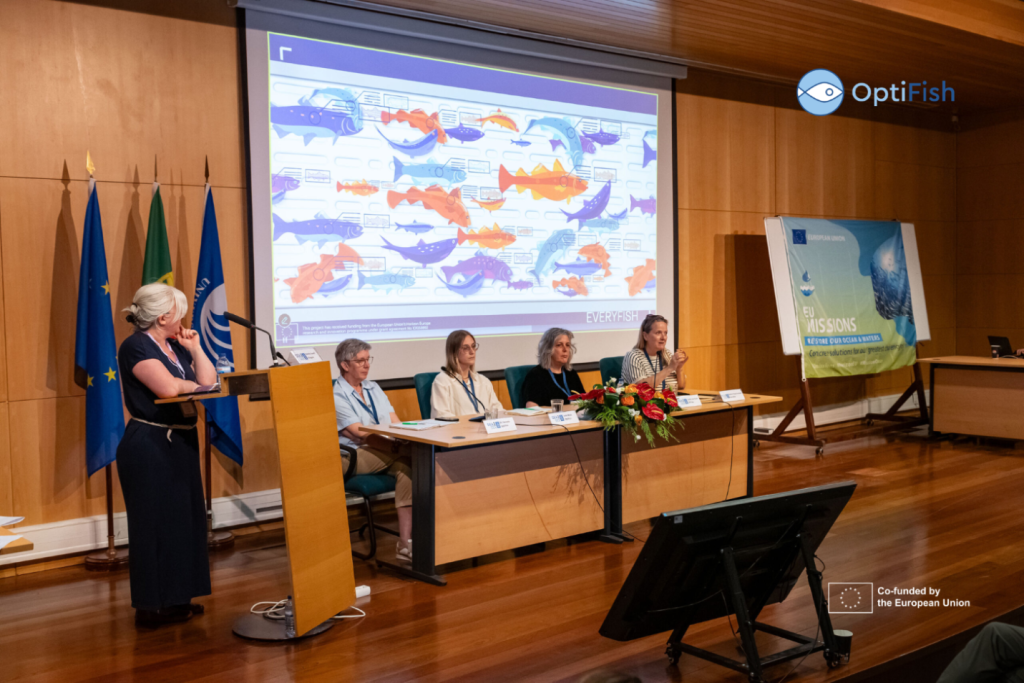
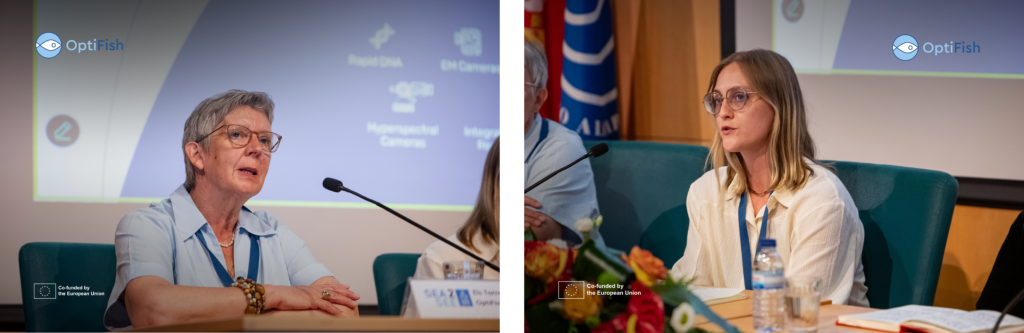
The conference also created space for collaboration across related European initiatives. During the roundtable “Collaborating for a Transparent and Sustainable Blue Food Ecosystem”, representatives from EveryFish, Eff-CoP, Breadcrumb, FishEUTrust and OptiFish shared their experiences in advancing traceability, food integrity, digital innovation and consumer engagement across seafood value chains.
Els Torreele and Jade Maes contributed to this exchange on behalf of OptiFish, highlighting the importance of working across projects to build shared knowledge and strengthen the wider blue food community.
The discussion showed that no single project can solve the challenges of seafood transparency alone. Progress depends on cooperation, knowledge exchange and continued engagement across sectors, disciplines and countries.
Why this matters
For OptiFish, the event offered valuable insights into how digital innovation can support trust, sustainability and accountability in seafood value chains. It also reinforced the importance of collaboration with sister projects working toward the same goal: a more transparent, responsible and future-ready seafood sector.
OptiFish thanks the SEA2SEE consortium for bringing together such an inspiring community and looks forward to continuing the conversation on digital innovation, trust and sustainability in Europe’s fisheries and seafood systems.